Dialogues on Decoloniality Through Critical Future Studies
Abstract
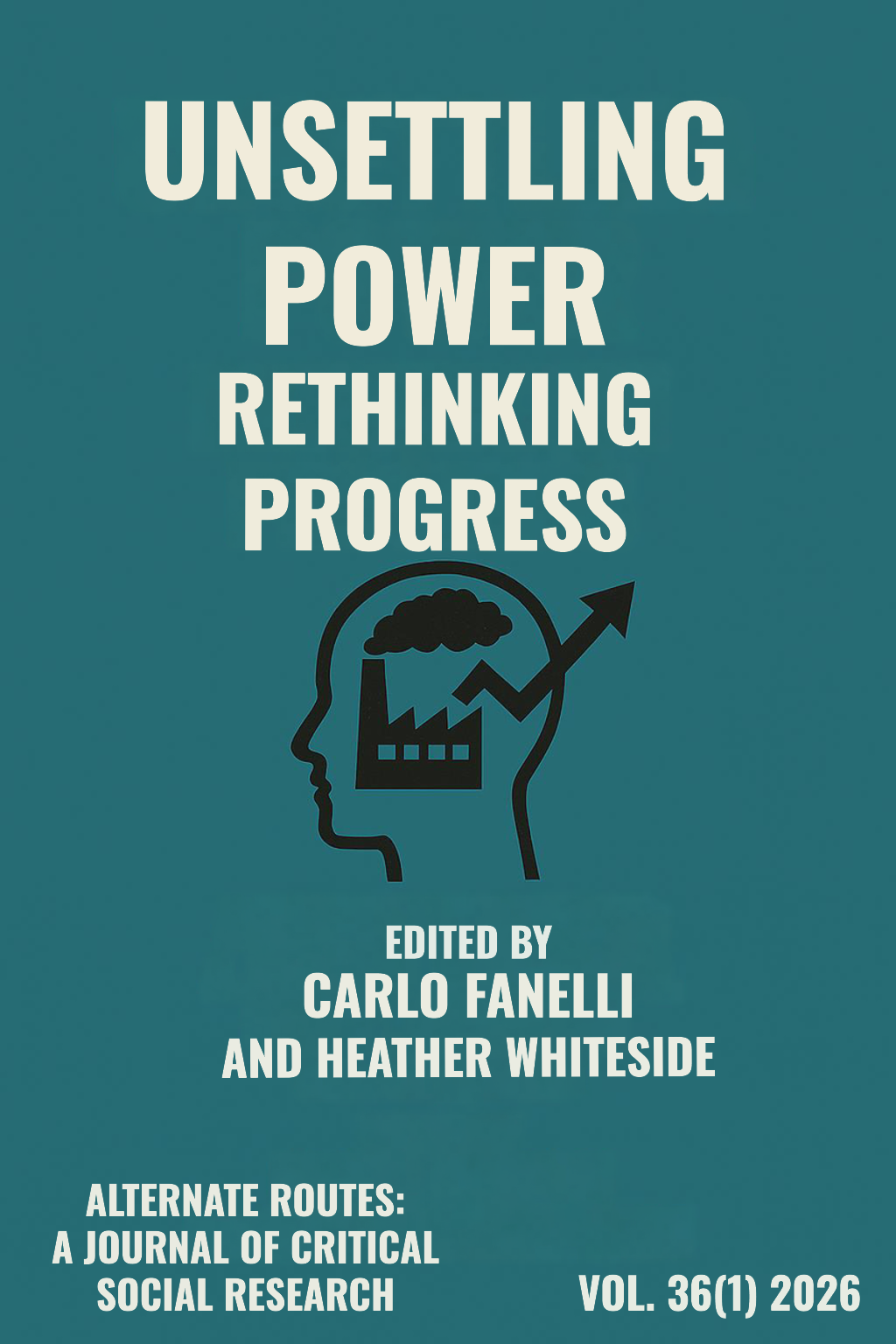
Decolonial scholarship offers crucial resources for rethinking emancipation, yet the collective construction and legitimation of decolonial futures remains insufficiently examined. Drawing on semi-structured interviews with twelve scholars engaged in decolonial praxis, this paper investigates how future imaginaries are articulated, justified, and contested under conditions shaped by coloniality and neoliberal crisis. Framed through dialogical futurity as an integration of Critical Futures Studies and Social Representations Theory, the analysis shows how participants unsettle colonial temporalities, mobilise memory and affect, and position their visions in relation to contemporary Left politics. Three recurrent orientations emerge: unsettling, creating, and reworlding. These orientations reveal decolonial futures as contested fields of temporal legitimacy in which plural worlds are imagined against extractivism, epistemic hierarchy, and state violence. The paper contributes a psychosocial account of futurity as a socially mediated political practice and argues that resonance, rather than assimilation, offers a more productive relation between decolonial thought and the contemporary Left.
Downloads
Published
How to Cite
Issue
Section
License
Copyright (c) 2026 Alternate Routes: A Journal of Critical Social Research

This work is licensed under a Creative Commons Attribution-NonCommercial-NoDerivatives 4.0 International License.
Articles are published in Alternate Routes: A Journal of Critical Social Research under the Creative Commons "Attribution/Non-Commercial/No Derivative Works" Canada licence.
The copyright for the articles published in this journal is retained by the authors, with first publication rights granted to the journal. By virtue of their appearance in this open access journal, articles may be used, with proper attribution, in educational and other non-commercial, not-for-profit settings. The submission of a manuscript to Alternate Routes will be taken to mean that the author understands and agrees to the following:
- the manuscript represents original work not previously published;
- the manuscript is not being considered elsewhere for publication in the same language (publication elsewhere in an alternate language does not preclude acceptance of submission to Alternate Routes);
- appropriate written copyright permissions have been secured for republication of any copyrighted material contained in the manuscript;
- copyright for this article is retained by the author, with first publication rights granted to Alternate Routes;
- by virtue of its appearance in this open access journal, it is understood that the article is freely available for use, with proper attribution, for educational and other non-commercial purposes;
- reuse of the article for commercial purposes by anyone other than the author requires permission of the author;
- the author agrees to cite Alternate Routes as a source whenever h/she later republishes or reuses the article in other platforms.